
In today’s competitive business environment, finance teams face constant pressure to process invoices faster, improve cash flow visibility, reduce operational costs, and maintain compliance. Traditional manual accounts payable processes can no longer support the speed and efficiency modern businesses require. This is why businesses across the United States invest in AP automation software for small business operations.
From AI-powered invoice processing to cloud-based approval workflows and real-time audit tracking, accounts payable automation transforms how companies manage vendor payments and financial operations.
Modern cloud-based accounts payable solutions get rid of repetitive manual tasks, cut down on invoice errors, boost compliance, and give finance leaders real-time financial insights. Whether your business handles 100 invoices per month or 10,000, automation helps you scale operations without adding to accounting overhead.
What Is AP Automation Software?
Accounts payable automation software is a digital solution that automates invoice management, approval workflows, vendor payments, reporting, and audit tracking.Instead of entering invoice data into spreadsheets or accounting systems, AP automation platforms use technologies like Artificial Intelligence (AI), OCR (Optical Character Recognition), workflow automation, machine learning, and cloud computing.These technologies streamline the entire accounts payable process from invoice receipt to payment reconciliation.
Why Small Businesses Need AP Automation
Software
Small businesses often operate with limited accounting resources. Manual AP workflows consume time, increase operational costs, and introduce financial risks.
Common Manual AP Challenges
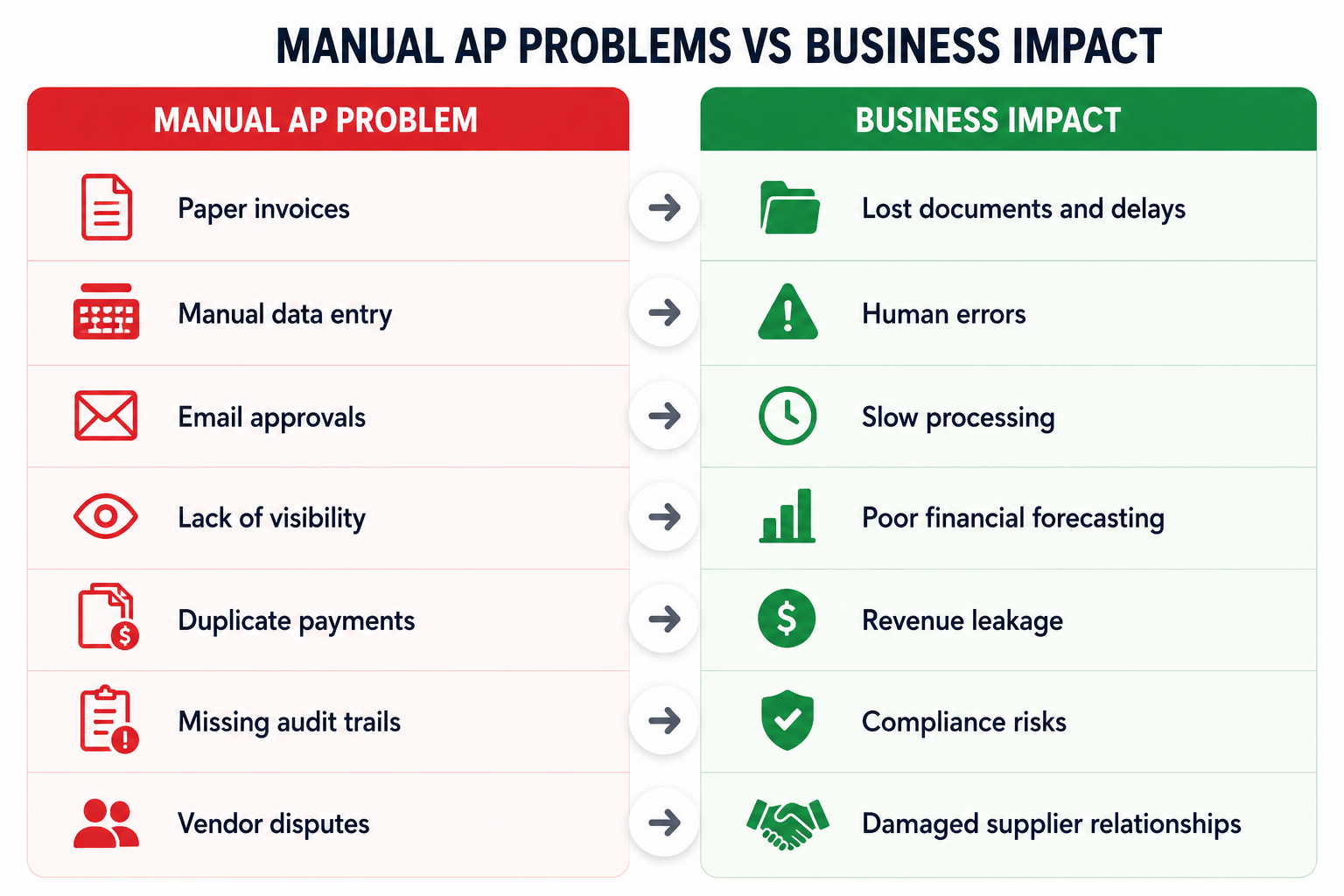
By putting into action accounts payable automation software, businesses can automate repetitive financial tasks while improving accuracy and scalability.
How AP Automation Software Works
Modern AP automation platforms follow a streamlined workflow that begins with invoice capture. Invoices are received through emails, PDFs, scanned paper invoices, vendor portals, and EDI systems.AI-powered OCR extracts invoice data automatically, while the software validates vendor information, purchase order details, invoice amounts, and tax information to reduce data entry errors.
The system then routes invoices to the right approvers based on department, invoice amount, vendor category, and business rules. Once approvals are completed, payments can be scheduled and processed automatically while every action is recorded for compliance and audit readiness.
Key Benefits of AP Automation Software for
Small Business
AP automation software helps businesses improve operational efficiency, reduce manual processing, and strengthen financial visibility.Businesses adopting AP automation often experience significantly faster invoice processing times, reduced operational costs, and improved payment accuracy.
By eliminating repetitive tasks such as paper handling, filing, printing, manual reconciliation, and spreadsheet-based tracking, finance teams can focus on strategic financial operations instead of administrative work.
Automation also improves cash flow management through real-time dashboards that provide visibility into outstanding liabilities, vendor obligations, payment schedules, and early payment discount opportunities.At the same time, stronger vendor relationships are built through more accurate payments, transparent communication, better invoice tracking, and faster dispute resolution.
Modern accounts payable audit software further enhances compliance through detailed audit trails, role-based permissions, secure document retention, and automated compliance reporting, helping businesses reduce fraud risk and strengthen financial governance.
Essential Accounts Payable Software Features
Choosing the right AP solution requires understanding the most important features businesses should prioritize.
AI Invoice Capture
Modern AP platforms use AI-powered OCR technology to extract invoice data from PDFs, emails, scanned documents, and images automatically. This improves processing speed, reduces errors, and minimizes manual work for finance teams.
Automated Approval Workflows
Invoices are routed automatically using predefined business rules. Approval automation improves processing speed, accountability, and workflow consistency while reducing approval bottlenecks.
Purchase Order Matching
Three-way matching compares invoices, purchase orders, and goods receipts to prevent duplicate payments, fraud, and overbilling issues.
Cloud Accessibility
Cloud based accounts payable solutions enable remote access, multi-user collaboration, real-time updates, and automatic backups. This makes cloud AP systems ideal for hybrid and remote work environments.
ERP and Accounting Integrations
Top AP platforms integrate seamlessly with QuickBooks, NetSuite, SAP, Xero, Sage, and Microsoft Dynamics. These integrations eliminate duplicate data entry and improve operational efficiency.
Audit Trail Management
Audit capabilities track invoice edits, approval history, payment logs, and user activity automatically, making financial audits simpler and improving compliance visibility.
Reporting & Analytics
Modern dashboards provide insights into invoice cycle times, vendor spending, approval bottlenecks, payment performance, and cash flow trends. Finance leaders gain actionable intelligence that supports better decision-making.
Cloud Based Accounts Payable Solutions vs
Traditional AP Systems
Businesses are increasingly shifting toward cloud platforms because of their flexibility, scalability, and lower infrastructure costs.
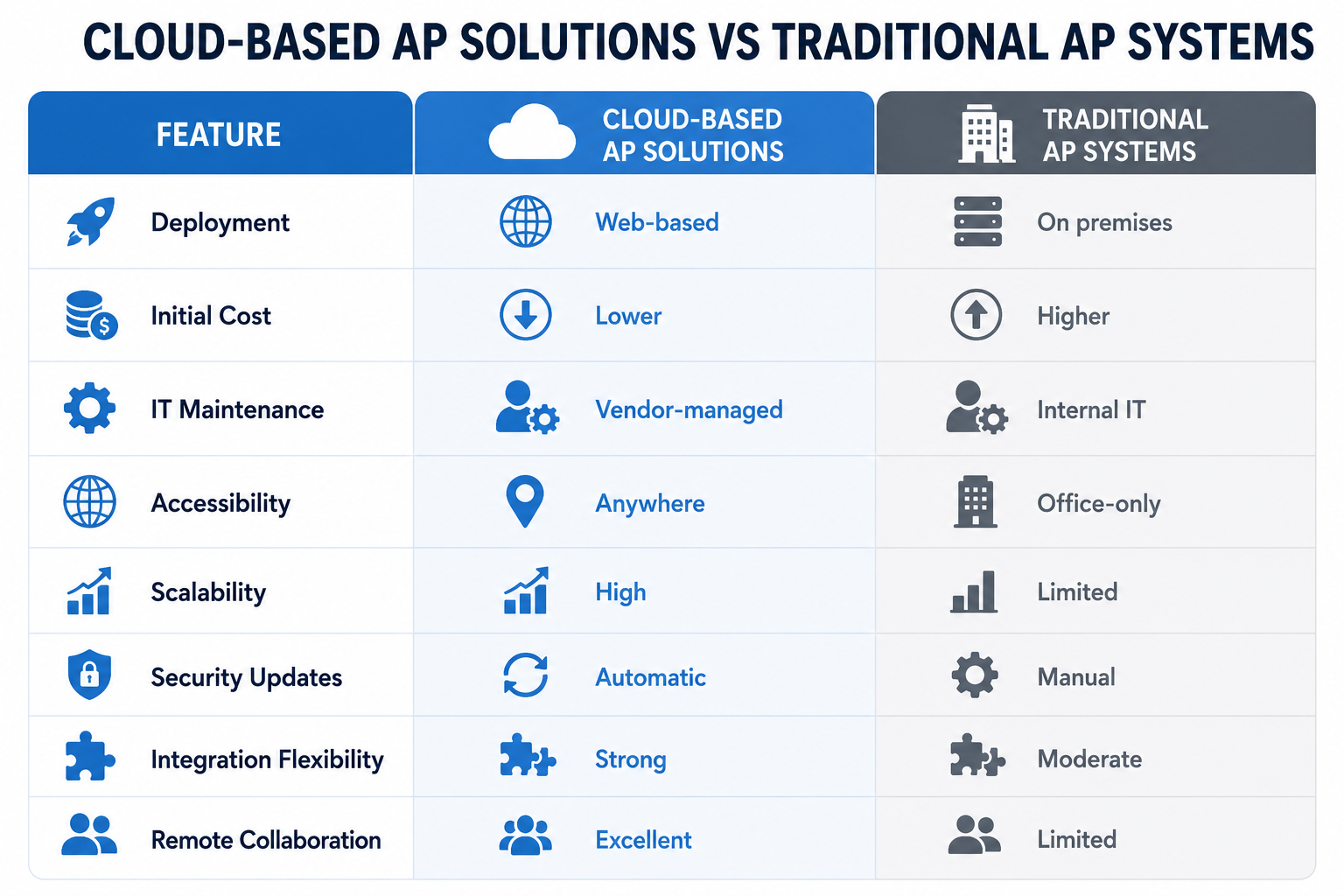
Cloud-based systems provide better scalability and lower infrastructure costs, making them the preferred choice for growing businesses.
Why Cloud AP Solutions Are Growing in the
United States
Several trends continue to drive AP automation adoption across the United States. Remote work expansion, rising invoice volumes, AI adoption, digital transformation initiatives, increasing compliance requirements, and the demand to enhance operational efficiency are all accelerating the shift toward cloud AP systems. U.S. businesses increasingly prioritize automation to remain competitive while improving financial visibility and operational agility.
AI in Accounts Payable Automation
Artificial Intelligence is reshaping AP operations by improving efficiency, accuracy, and fraud prevention. Modern AP platforms use intelligent invoice recognition to extract invoice data with increased accuracy while machine learning algorithms identify duplicate invoices before payments are processed.
AI also strengthens fraud prevention by detecting suspicious payment patterns, unusual invoice behavior, and vendor anomalies. Predictive cash flow analytics help businesses forecast payment obligations, vendor payment risks, and potential cash flow shortages. In addition, smart approval routing allows systems to prioritize urgent invoices automatically, reducing delays and improving payment cycles.
Accounts Payable Audit Software: Why It
Matters
Compliance and financial transparency are essential for modern businesses. Without proper controls, businesses face audit failures, financial inaccuracies, fraud risks, and regulatory penalties. Modern accounts payable audit software helps organizations strengthen compliance through automated controls and real-time visibility.
Key Features of Accounts Payable Audit Software
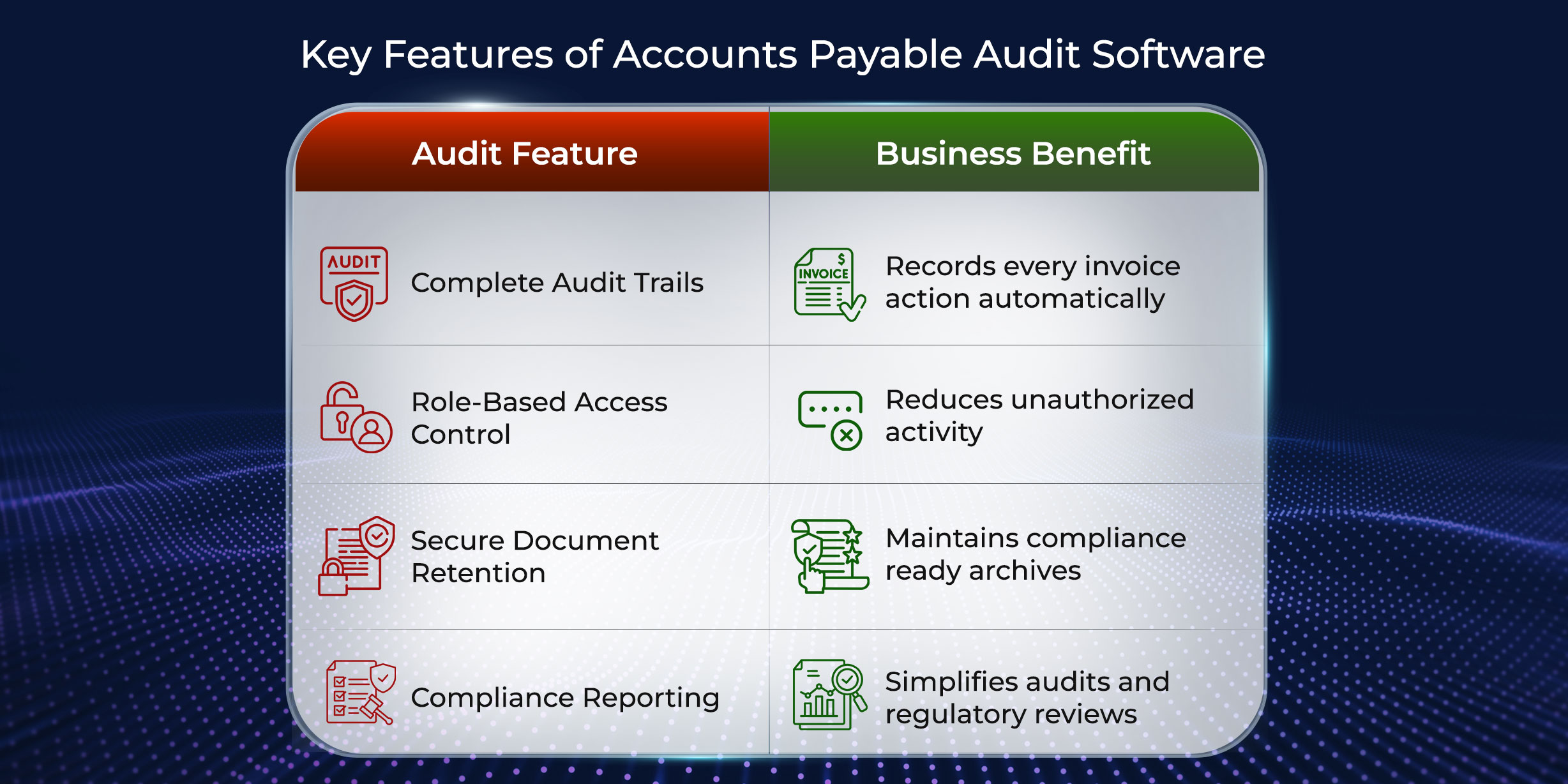
These capabilities improve financial security while reducing compliance risk.
How AP Automation Reduces Fraud
Manual AP systems are vulnerable to fraud due to limited visibility and inconsistent approval processes.Automation reduces risk through approval controls, duplicate invoice detection, user permissions, AI anomaly detection, and vendor validation processes. These capabilities strengthen financial security while improving accountability across finance operations.
Industries Benefiting from AP Automation
Several industries benefit significantly from AP automation because of high invoice volumes and complex financial workflows. Healthcare organizations use automation to improve vendor management, compliance, and payment speed.
Manufacturers benefit from PO matching, supplier payment automation, and procurement integration.
Property management firms automate utility invoices, contractor payments, and multi-location accounting processes, while retail and eCommerce businesses streamline supplier invoices and inventory-related payments.
How to Choose the Best AP Automation
Software for Small Business
Selecting the right solution requires careful evaluation of automation capabilities, integrations, security, usability, and pricing models.
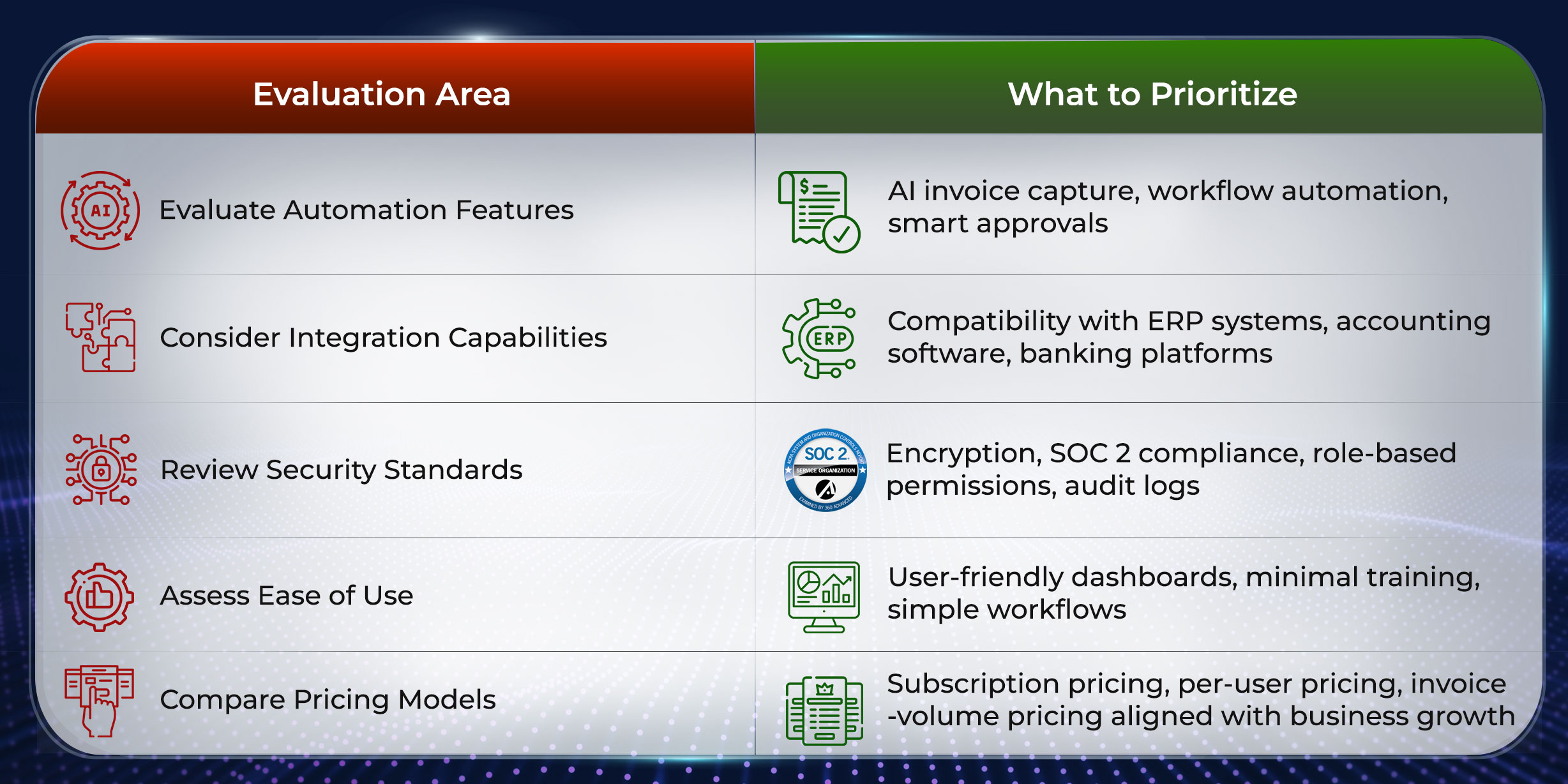
Businesses should choose solutions that align with operational needs while supporting future scalability.
AP Automation Implementation Best Practices
Successful AP automation implementation begins with mapping existing workflows and identifying manual bottlenecks, approval delays, and invoice processing inefficiencies.Businesses should begin with core automation areas such as invoice capture, approval workflows, and payment scheduling before expanding automation gradually across finance operations.Finance teams also require workflow education, onboarding support, and compliance guidance to ensure successful adoption.Organizations should continuously monitor KPIs such as invoice processing time, cost per invoice, approval turnaround time, and error rates to improve ROI and optimize workflows over time.
Common AP Automation Challenges
Employee resistance is a common challenge in AP automation because staff may feel uncertain about adopting new workflows and digital processes. This can be addressed by clearly demonstrating the efficiency gains of automation and conducting hands-on training sessions to help employees become comfortable with the new system.
Integration complexity is another major issue, especially when organizations rely on legacy systems that may not easily connect with modern automation platforms. Businesses can overcome this by selecting API-friendly solutions and collaborating with experienced implementation partners who can ensure smooth integration.
Data migration problems often arise when transferring historical invoice and vendor data into the new system. To reduce errors and disruptions, organizations should clean and validate existing data before migration and adopt a phased deployment strategy rather than moving everything at once.
Addressing these challenges early helps ensure smoother implementation and stronger long-term adoption.
Future Trends in Accounts Payable Automation
The future of AP automation will be driven by AI, predictive analytics, and hyper automation technologies. Touchless invoice processing will enable fully autonomous workflows, while embedded finance capabilities will integrate AP systems directly with banking and payment platforms.
Advanced predictive analytics will improve financial planning and forecasting, while AI-powered vendor intelligence systems will help businesses evaluate vendor risk automatically. As automation technologies continue evolving, businesses will increasingly automate end-to-end finance operations beyond accounts payable alone.
Conclusion
Manual accounts payable processes create operational inefficiencies, increase financial risk, and limit business scalability. Modern AP automation software for small business operations provides a faster, smarter, and more secure way to manage financial workflows.
With AI-driven invoice processing, cloud-based collaboration, automated approvals, and advanced audit capabilities, today’s accounts payable automation software helps businesses reduce costs while providing better visibility and compliance.
As digital finance transformation picks up speed across the United States, businesses investing in cloud-based accounts payable solutions will gain a significant competitive advantage through improved productivity, stronger vendor relationships, and better financial control. Whether your goal is reducing invoice processing time, improving audit readiness, or building a scalable finance operation, AP automation is no longer optional — it is crucial for sustainable growth in 2026 and beyond.
Frequently Asked Questions
How does accounts payable automation software work?
Accounts payable automation software uses AI, OCR, workflow automation, and cloud technology to digitize invoice processing, approvals, and payment management.
What are the most important accounts payable software
features?
Essential features include AI invoice capture, approval workflows, ERP integration, audit trails, reporting dashboards, and cloud accessibility.
Why are cloud-based accounts payable solutions popular?
Cloud AP solutions offer remote accessibility, scalability, lower upfront costs, automatic updates, and better collaboration capabilities.
What is accounts payable audit software?
Accounts payable audit software tracks invoice history, approvals, payments, and user actions to boost compliance and simplify audits.
Can AP automation reduce invoice processing costs?
Yes. AP automation reduces manual labor, payment errors, paper usage, and invoice delays, lowering overall processing costs.
Is AP automation suitable for small businesses?
Yes. Small businesses benefit from better efficiency, lower costs, stronger cash flow visibility, and more reliable financial controls.
How long does AP automation implementation take?
Implementation timelines vary based on complexity, integrations, and workflow requirements. Many small businesses deploy cloud AP systems within a few weeks.