Multi-Cloud Strategies for Regulatory and Compliance Readiness

“Meet every standard with confidence.”

Picture this: You’re leading a high-stakes project, and everything seems perfect—until a compliance audit appears on the horizon. Suddenly, you’re navigating a maze of industry regulations, security protocols, and reporting requirements. One misstep could mean costly penalties or reputational damage. But what if your business could confidently face these challenges, armed with the best tools and strategies?

That’s the promise of a multi-cloud approach. With Nexval as your partner, compliance readiness becomes a streamlined, stress-free part of your operations. We don’t just help you meet regulatory standards; we ensure you do so efficiently and cost-effectively, leveraging our certifications, expertise, and cutting-edge cloud solutions.

Simplifying Compliance with Multi-Cloud

Every industry has its own labyrinth of regulatory standards, from data protection laws to operational benchmarks. Meeting these standards requires agility, precision, and the ability to adapt to constant changes. Multi-cloud strategies provide businesses with the flexibility to align their operations across global compliance frameworks seamlessly.

For example, multi-cloud environments allow you to:

  • Segment workloads across regions to meet data residency requirements.
  • Automate reporting for real-time compliance updates.
  • Utilize built-in security frameworks tailored to industry regulations.

At Nexval, we combine these capabilities with our ISO 27001, SOC2, and SOC3 certifications, ensuring your business operates securely and within regulatory boundaries.

Building Confidence with Technology

Imagine having tools like Snowflake for data optimization, enabling you to securely store and analyze sensitive information without breaching compliance standards. Or leveraging AI-powered solutions to automatically flag potential risks before they become problems.

With Nexval’s multi-cloud strategies, you gain access to such technologies, paired with cost-saving benefits like free credits for initial adoption and pay-as-you-go models for compliance-specific workloads. This approach ensures you not only meet standards but also optimize your budget in the process.

Tailored Solutions for Every Industry

Whether you’re in finance, healthcare, or technology, regulatory landscapes are evolving faster than ever. Nexval’s expertise ensures you stay ahead of the curve.

  • Healthcare: Adhere to HIPAA standards with secure data management and encryption.
  • Finance: Ensure compliance with PCI DSS and other critical regulations through workload segregation and automated audits
  • Technology: Manage GDPR requirements effortlessly with region-specific data strategies.

By customizing our solutions to your industry’s needs, we help you stay compliant without sacrificing performance or innovation.

Why Nexval?

At Nexval, compliance readiness is built into our DNA. With over 20 years of experience in digital services and certifications that demonstrate our commitment to excellence, we provide:

  • Proven expertise in industry-specific compliance frameworks.
  • Cost-effective solutions with programs like usage-based pricing and first-tollgate credits.
  • State-of-the-art technologies like Snowflake and AI tools to simplify compliance management.

Meeting every standard doesn’t have to be overwhelming. With Nexval, you’ll navigate the complex regulatory landscape confidently, knowing you have a trusted partner by your side.

Ready to simplify compliance and stay ahead? Book a consultation session with Nexval today, and let’s ensure your business is always audit-ready.

The Role of Multi-Cloud in Digital Transformation

A Map to Innovation: Multi-Cloud as the Enabler

Imagine this: You’re the captain of a ship navigating uncharted waters. Your destination? A thriving future powered by innovation, efficiency, and scale. The sea is vast, unpredictable, and full of opportunities, but to navigate it successfully, you need more than just a sturdy vessel. You need a map, a compass, and the right crew.

In the world of digital transformation, the cloud is your ship, and a multi-cloud strategy is the sophisticated navigation system that ensures you reach your destination. At Nexval, we don’t just hand you the tools; we guide you every step of the way, unlocking hidden treasures along the journey—innovation, efficiency, and yes, cost savings.

A Map to Innovation: Multi-Cloud as the Enabler

Picture this: Your business has the freedom to choose the best tools for every challenge—whether it’s building AI-powered customer experiences or automating mundane back-office tasks. Multi-cloud environments give you that freedom, offering the flexibility to pick the best solutions across providers.

ake Snowflake, for example. This powerful data platform acts as the engine of your ship, optimizing data flows and enabling seamless insights. With Nexval as your guide, integrating tools like Snowflake becomes effortless, allowing you to focus on steering your business toward success. And here’s the kicker—multi-cloud providers often offer early adopter credits and usage-based models, ensuring innovation doesn’t sink your budget.

The Compass: Data Intelligence at Your Fingertips

Now imagine you’re charting your course using real-time data that highlights the safest routes and potential storms ahead. That’s the power of data intelligence in a multi-cloud ecosystem.

With the right tools in place, you can process massive datasets to uncover trends, predict outcomes, and make data-driven decisions. At Nexval, we help you harness platforms like Snowflake to create data ecosystems that don’t just store information—they transform it into actionable insights. Add to that cost-saving options like reserved capacity discounts, and suddenly, your data journey becomes both smarter and leaner.

The Crew: AI and Automation Leading the Charge

No ship sails alone, and no business scales without support. In today’s fast-paced market, AI and automation are your first mates, tirelessly working to streamline processes and improve efficiency.

With multi-cloud solutions, deploying AI tools is as seamless as unfurling sails in a steady wind. Whether you’re automating mortgage workflows or deploying personalized customer experiences, Nexval ensures you’re equipped with the best technologies available. And here’s where the magic happens: Programs like first-tollgate free credits and cost-sharing incentives make adopting these cutting-edge tools accessible for businesses of all sizes.

The Journey with Nexval

At Nexval, we’re more than your cloud partner—we’re your co-captain, helping you navigate the complexities of multi-cloud with confidence.

  • We ensure cost optimization through credits, discounts, and resource scaling.
  • We enable seamless integration of tools like Snowflake for data intelligence.
  • We unlock the potential of AI and automation, driving measurable outcomes.

Your destination is clear: a future powered by digital transformation. With Nexval’s expertise, the journey becomes an adventure where every step brings you closer to innovation, efficiency, and unparalleled success.

So, what are you waiting for? The tide is high, the winds are in your favor, and the future is yours to conquer.

Set sail with Nexval today—your journey to digital transformation begins here.

The End of Sampling: How AI Is Redefining Mortgage Loan Quality Audits

Sampling has long been a cornerstone of mortgage origination loan audits. Whether it’s assessing compliance, monitoring loan quality, or identifying fraud, sampling has offered a practical way to audit without drowning in data.

But what if we didn’t need to sample anymore?

The mortgage industry is reaching a critical inflection point. With artificial intelligence (AI) and unlimited computational resources, we’re moving toward a future where every single loan can be audited in real time. This is a transformative shift, especially in an industry where even one mistake can have devastating consequences.

Why Sampling Has Been the Norm

Sampling in mortgage lending has traditionally been a necessity born of resource limitations. Conducting a thorough review of every loan file in a portfolio is both time-intensive and prohibitively expensive. Imagine the cost of hiring two sets of underwriters—one to underwrite loans and a second to re-underwrite the entire process for quality control. This would effectively mean performing a 100% re-underwrite, an approach that’s simply unfeasible in an industry already grappling with razor-thin margins and the volatility of interest rate-driven market cycles. Instead, lenders rely on sampling, examining a subset of loans to draw statistically valid conclusions about the quality and compliance of their overall portfolio. While practical, this approach inherently leaves gaps and risks undetected errors that can prove costly.

The Cost of a Single Mistake

In other industries, especially those producing high volume and low cost products or services, a reasonable amount of sampling errors might be just inconvenient; in mortgage banking however, they can be catastrophic. Consider a few of the potential consequences of an undetected error in a single originated loan:

• Loan Buybacks: A single non-compliant loan could result in a costly repurchase demand from investors.

• Regulatory Penalties: Undiscovered compliance gaps could lead to fines from the investor or Mortgage Insurance provide

• Reputational Damage: Errors in critical areas like a fair lending violation can lead to public scrutiny, loss of customer trust, and long-term harm to the lender’s brand and credibility.

These risks underscore a painful truth: sampling leaves too much to chance and possibly threatens the long-term viability of the mortgage company.

Enter AI: Auditing Every Loan, Every Time

Artificial intelligence eliminates guesswork by empowering lenders to audit every loan file in its entirety, overcoming the challenges posed by fragmented data. Mortgage loan data typically resides across disparate systems—Loan Origination Systems (LOS), Appraisal platforms, Title systems, and more—and is often locked within scanned documents or static images. Traditionally, human auditors had to manually gather and transcribe these data points for quality control, a labor-intensive and time-consuming process.

Today, advanced AI systems can seamlessly analyze data from source documents, screen captures of core systems, or API integrations with these platforms. By doing so, AI enables a comprehensive audit of 100% of loan files, identifying errors, compliance gaps, and potential risks with unprecedented speed and accuracy—transforming a task that once required countless human hours into an efficient, automated process.

Further, AI audit systems surpass human auditors in its ability to continuously learn and improve. Unlike humans, who require years of experience to develop expertise, AI systems are trained on vast datasets encompassing past audits, diverse scenarios, and even errors made during prior reviews. This iterative learning process enables AI to refine its accuracy and adaptability with each audit cycle. As it encounters new patterns or anomalies, it integrates these insights into its algorithms, ensuring that similar issues are identified more effectively in the future. This eliminates the reliance on individual human expertise, developed over a long time – one human at a time, and instead offers a scalable, ever-improving solution that ensures consistent quality and precision—no matter how complex or varied the audit requirements.

Here’s how AI is reshaping mortgage loan audits:

• Real-Time Analysis: AI can review entire loan portfolios in minutes, flagging discrepancies as soon as they arise.

• Precision: Machine learning models can detect subtle patterns—such as mismatched income data or anomalies in credit reports—that humans might overlook.

• Consistency: AI applies the same rules uniformly, ensuring no file slips through the cracks.

For mortgage lenders, this means fewer costly mistakes and greater confidence in their portfolios.

Beyond Avoiding Errors: Unlocking Strategic Value

While AI transforms the audit process, human expertise remains vital. Mortgage lending is complex, and not every anomaly flagged by AI requires action. Further, as I noted in a previous article, Six Hidden Risks of using AI in Mortgage Compliance, AI systems are prone to unexplained “hallucination” errors. Humans can counter these shortcomings by bringing into the process the context, judgment, and decision-making needed to ensure fair outcomes.

In this new paradigm, human auditors focus on:

• Validating Findings: Ensuring AI-flagged errors are genuine and actionable.

• Enhancing AI Models: Continuously training systems to adapt to new risks and regulations.

• Providing Insight: Understanding nuances AI might miss, such as borrower-specific circumstances.

This “human-in-the-middle” approach combines the scale and speed of AI with the insight of experienced professionals.

Beyond Avoiding Errors: Unlocking Strategic Value

Auditing every loan, every time, doesn’t just reduce errors—it creates opportunities for improvement. Lenders gain granular insights into their operations, allowing them to:

• Identify systemic issues and resolve them at the root.

•  Refine underwriting guidelines to improve efficiency and accuracy.

• Reduce costly buybacks and investor disputes.

• Proactively address compliance risks in real time before they escalate.

Veritiq: Your Partner in AI-Driven Audits

At Veritiq, we understand the stakes. That’s why we’ve developed an AI-based real-time, full-frame audit system designed specifically for mortgage lenders. With our solution, you can move beyond sampling to audit every loan in your portfolio with precision and confidence.

Whether you’re looking to reduce costly loan buybacks, improve compliance, or enhance operational efficiency, Veritiq’s cutting-edge technology and human-centered approach ensure you’re always one step ahead.

Are you ready to embrace the future of mortgage loan quality? Let’s discuss how Veritiq can help.

Leveraging Deming’s 14 Points for Quality Management in Mortgage Servicing

Quality in mortgage servicing requires a precise approach to ensure accuracy, compliance, and efficiency across diverse functions like escrow management, investor reporting, foreclosure processing, and more. Dr. W. Edwards Deming’s 14 Points for Management, though traditionally applied in manufacturing, serve as a powerful framework for quality improvement that’s equally relevant to the mortgage servicing industry. By adopting these principles with a technical focus, we can streamline operations, minimize risks, and improve service delivery in complex, compliance-driven environments. In this article, I will explain Deming’s 14 quality management principles with examples in a representative area of mortgage servicing.

1. Create Constancy of Purpose Toward Improvement

Establishing a culture focused on continuous improvement means prioritizing long-term optimization over short-term fixes. For instance, in escrow management, maintaining accuracy in account reconciliation and disbursements requires automated validation and auditing processes. By implementing a purpose-built automation solution, teams can reduce human error, ensure compliance with regulatory timelines, and ultimately improve customer satisfaction and operational efficiency.

2. Adopt the New Philosophy

In mortgage servicing, a proactive, tech-driven quality philosophy is crucial. In investor reporting, for example, traditional manual processes can lead to data inaccuracies and delays. Adopting real-time data validation techniques and automated workflows ensures accuracy and timeliness, improving transparency and reducing manual effort. This philosophy minimizes the risk of inaccuracies and builds stronger investor relationships through reliable data reporting.

3. Cease Dependence on Inspection Alone

Reliance on end-of-process inspections can introduce costly delays if errors are identified late. In foreclosure processes, integrated, in-process checks and validation are essential. This approach involves embedding compliance checks at each stage—such as validating property valuation or legal documentation early—reducing the risk of rework and associated costs. Automation platforms with configurable checkpoints can streamline this process, ensuring that regulatory requirements are consistently met without adding manual burden.

4. End the Practice of Awarding Business on Price Tag Alone

Vendor selection based solely on price can lead to compromised quality and security, especially for sensitive processes like document custody. Selecting vendors with proven data security, strong SLAs, and advanced integration capabilities ensures that sensitive borrower information is protected and managed efficiently. By prioritizing vendor quality, mortgage servicers reduce risks associated with data breaches, mismanagement, or delays in document handling.

5. Improve Constantly and Forever the System of Production and Service

Mortgage servicing requires continuous system improvements to remain compliant and efficient. In payment processing, automated communication and error-checking mechanisms help teams respond promptly to borrower inquiries and minimize the risk of missed or misallocated payments. By consistently refining processes, servicers can reduce borrower complaints and improve cash flow, all while staying aligned with regulatory standards.

6. Institute Training on the Job

Maintaining a high standard in quality requires ongoing training, particularly in complex areas like delinquency management. Regular, role-specific training in compliance, risk assessment, and customer interaction prepares teams to handle sensitive cases accurately and empathetically. Incorporating automated training modules and scenario-based learning in the servicing platform can keep team skills up-to-date with evolving regulations and industry standards, reducing both compliance risk and customer churn.

7. Institute Leadership

Effective leadership in mortgage servicing is crucial for guiding teams through compliance-heavy and often sensitive operations. In default servicing, leaders must establish clear protocols and ensure team members understand and follow them rigorously. By integrating leadership dashboards that display real-time performance metrics, team leads can make informed decisions and direct their teams effectively, ultimately reducing errors and fostering a culture of accountability.

8. Drive Out Fear

Encouraging an environment where employees feel safe reporting potential issues is essential in mortgage servicing. In compliance-sensitive areas like loan modifications, open communication channels allow teams to report regulatory concerns without fear, enabling quick, proactive adjustments. An automated system that facilitates anonymous feedback and tracks issue resolution can help organizations address compliance risks early and prevent penalties.

9. Break Down Barriers Between Departments

Effective mortgage servicing relies on seamless communication across departments. For instance, loss mitigation and collections teams often need to coordinate closely to offer borrowers consistent, compliant solutions. A centralized platform with cross-functional access to borrower data and compliance insights fosters collaboration and ensures all teams operate from the same information, reducing the risk of inconsistencies or miscommunications.

10. Eliminate Slogans and Exhortations

Generic slogans don’t drive performance. For example, rather than encouraging teams with “Zero Defects” without actionable support, providing customer self-service tools and responsive communication channels offers employees tangible ways to enhance the borrower experience. By focusing on concrete solutions, servicers can reduce error rates and elevate customer satisfaction.

11. Eliminate Numerical Quotas for the Workforce

Quotas can drive teams to prioritize speed over quality. In loan servicing quality reviews, for instance, focusing on qualitative rather than quantitative metrics allows for a thorough review process that captures critical errors and compliance gaps. By shifting performance metrics to emphasize compliance and accuracy, servicers can reduce costly errors and regulatory issues.

12. Remove Barriers to Pride of Workmanship

Employees in roles like payment reconciliation need the flexibility to suggest process improvements that enhance accuracy and efficiency. Empowering staff to refine reconciliation workflows—such as by introducing AI-driven error detection—reduces mistakes and improves accuracy, fostering a work environment where employees feel a sense of ownership over their contributions to quality.

13. Institute a Vigorous Program of Education and Self-Improvement

In a field as dynamic as mortgage servicing, continuous education is essential. For instance, staying updated on regulatory changes in fair lending practices can be challenging without structured learning programs. By offering resources and continuous training on these updates, servicers can ensure teams are knowledgeable and confident in handling new requirements, reducing compliance risks across the board.

14. Put Everybody in the Company to Work Toward Accomplishing the Transformation

Quality management should be a company-wide effort, not confined to individual departments. In investor compliance, aligning every team with quality objectives fosters a shared commitment to compliance and operational excellence. A unified quality platform that allows all departments to access critical data and participate in quality initiatives helps create an organization-wide focus on continuous improvement.

Six Hidden Risks of AI Hallucinations in Mortgage Compliance – Retrieval Augmented Generation (RAG) as a Solution

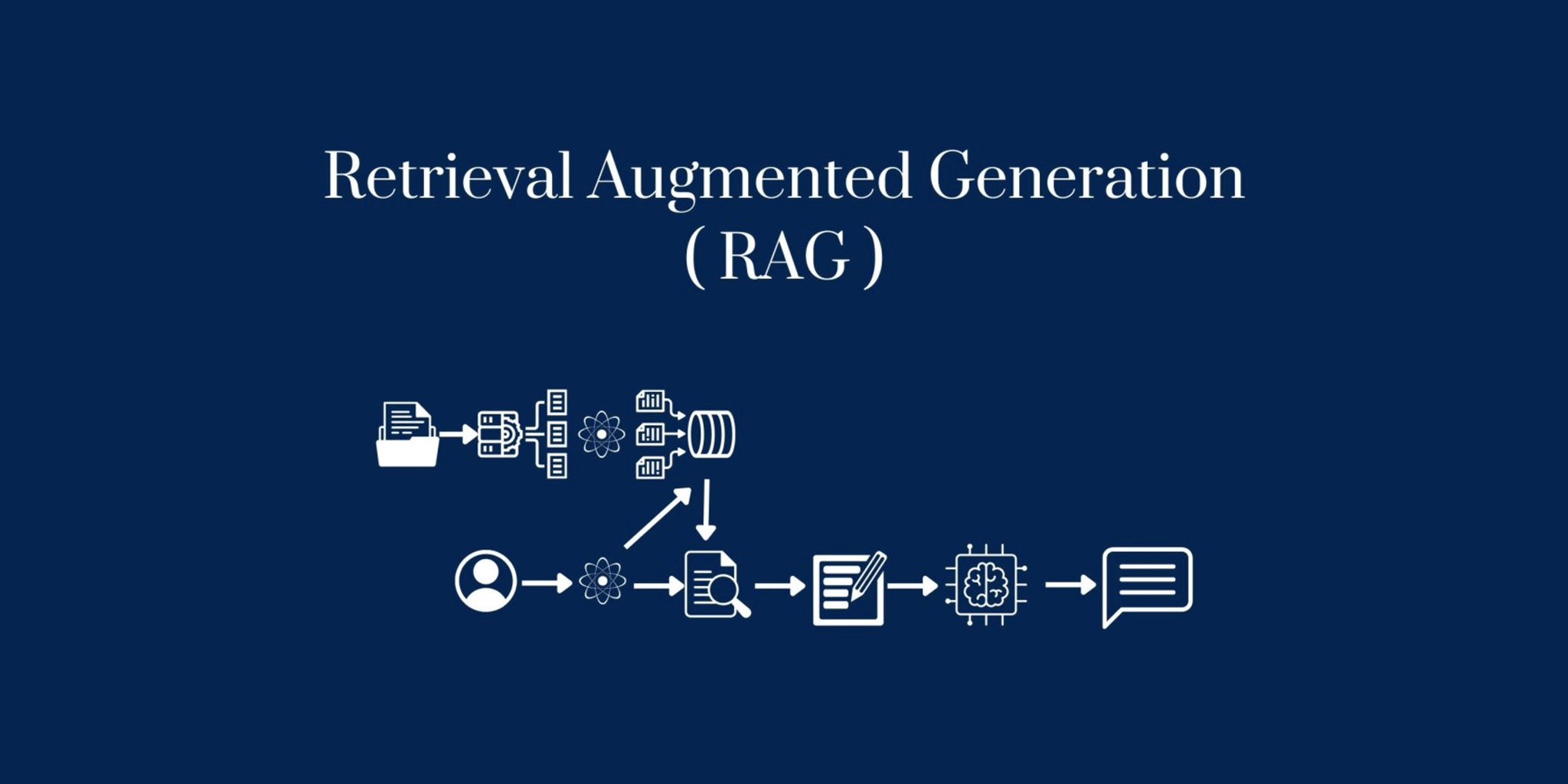
AI has enormous potential in mortgage banking compliance, offering faster, more efficient ways to navigate the ever-growing maze of regulatory requirements. Yet there’s an undercurrent of risk that those of us in the industry can’t ignore: hallucinations. AI hallucinations—misleading or outright false outputs—pose a real threat to accuracy and compliance in mortgage banking. This is where new advancements, like Retrieval-Augmented Generation (RAG), are stepping in to reduce these risks by grounding AI responses in verified, real-time data.

1. Create Constancy of Purpose Toward Improvement

Establishing a culture focused on continuous improvement means prioritizing long-term optimization over short-term fixes. For instance, in escrow management, maintaining accuracy in account reconciliation and disbursements requires automated validation and auditing processes. By implementing a purpose-built automation solution, teams can reduce human error, ensure compliance with regulatory timelines, and ultimately improve customer satisfaction and operational efficiency.

2. Adopt the New Philosophy

In mortgage servicing, a proactive, tech-driven quality philosophy is crucial. In investor reporting, for example, traditional manual processes can lead to data inaccuracies and delays. Adopting real-time data validation techniques and automated workflows ensures accuracy and timeliness, improving transparency and reducing manual effort. This philosophy minimizes the risk of inaccuracies and builds stronger investor relationships through reliable data reporting.

3. Cease Dependence on Inspection Alone

Reliance on end-of-process inspections can introduce costly delays if errors are identified late. In foreclosure processes, integrated, in-process checks and validation are essential. This approach involves embedding compliance checks at each stage—such as validating property valuation or legal documentation early—reducing the risk of rework and associated costs. Automation platforms with configurable checkpoints can streamline this process, ensuring that regulatory requirements are consistently met without adding manual burden.

4. End the Practice of Awarding Business on Price Tag Alone

Vendor selection based solely on price can lead to compromised quality and security, especially for sensitive processes like document custody. Selecting vendors with proven data security, strong SLAs, and advanced integration capabilities ensures that sensitive borrower information is protected and managed efficiently. By prioritizing vendor quality, mortgage servicers reduce risks associated with data breaches, mismanagement, or delays in document handling.

5. Improve Constantly and Forever the System of Production and Service

Mortgage servicing requires continuous system improvements to remain compliant and efficient. In payment processing, automated communication and error-checking mechanisms help teams respond promptly to borrower inquiries and minimize the risk of missed or misallocated payments. By consistently refining processes, servicers can reduce borrower complaints and improve cash flow, all while staying aligned with regulatory standards.

6. Institute Training on the Job

Maintaining a high standard in quality requires ongoing training, particularly in complex areas like delinquency management. Regular, role-specific training in compliance, risk assessment, and customer interaction prepares teams to handle sensitive cases accurately and empathetically. Incorporating automated training modules and scenario-based learning in the servicing platform can keep team skills up-to-date with evolving regulations and industry standards, reducing both compliance risk and customer churn.

4. Interpretive Hallucinations

Interpretive hallucinations occur when a model makes assumptions or subjective conclusions without enough evidence. This can be especially dangerous in mortgage compliance, where decisions must be based on concrete regulatory data.

In one instance, while reviewing the Fair Lending requirements, the AI inferred that any policy impacting minority communities negatively could automatically be deemed discriminatory. While this might be a fair assumption, regulatory analysis requires concrete data and intent, not just outcome-based assumptions. If RAG were integrated, the model could retrieve recent enforcement cases or official fair lending guidelines to provide a more nuanced interpretation based on actual precedents, rather than making subjective leaps.

5. Quoting Hallucinations

Quoting hallucinations surprised me the first time I saw them. This happens when a model fabricates citations or references. In mortgage compliance, where the credibility of sources is paramount, this can be particularly damaging.

I recall the AI referencing a supposed CFPB “bulletin” on adjustable-rate mortgages (ARMs) that didn’t actually exist. If I hadn’t double-checked, I could have cited a non-existent document, undermining trust and risking regulatory backlash. With RAG, the model would only pull information from verified sources, reducing the chances of quoting hallucinations and ensuring that all references are genuine and credible. RAG could make a solution like Veritiq, which specializes in compliance, even more trustworthy by grounding its compliance recommendations in real documents.

6. Implied Knowledge Hallucinations

Implied knowledge hallucinations happen when the model implies it has up-to-date information, even when it doesn’t. In mortgage compliance, where regulations are frequently updated, this can be misleading and potentially risky.

This issue surfaced when the model confidently stated, “The CFPB recently updated rules on appraisal independence,” despite only having knowledge up to 2023. RAG would resolve this by enabling the model to access the latest updates directly from regulatory databases, such as the CFPB’s online resources. This ensures that users are provided with accurate and timely information, and it’s a capability that makes solutions like Veritiq even more dependable for compliance teams.

Veritiq and the Power of RAG in Mortgage Compliance

As compliance becomes more complex, Veritiq’s AI-enabled compliance management solution, enhanced by RAG technology, offers a much-needed safeguard. Veritiq pulls real-time regulatory data and provides grounded compliance recommendations, helping mortgage compliance teams stay on top of evolving regulations. By combining AI insights with reliable data, Veritiq reduces the risk of hallucinations and empowers compliance professionals with trustworthy, actionable insights, helping them navigate the complexities of today’s regulatory environment with confidence.

If you’re working with AI in compliance, I’d love to hear your thoughts on this. How do you see RAG changing the game, and what other challenges do you think it could address in the compliance world?

Harnessing Gradient Boosting Machines (GBM) of AI to Enhance Credit Scoring for Mortgage Lenders

As a mortgage technologist who has spent over 3 decades working with technology and data in the mortgage industry, I’m always looking for ways to improve processes and drive better outcomes for lenders. One of the most exciting developments I’ve seen lately is the application of Gradient Boosting Machines (GBM) in credit scoring. This AI-powered tool is changing how we assess borrower risk, and it’s something I believe every lender should be considering to stay competitive.

What Makes Gradient Boosting Machines So Powerful?

GBMs are a form of machine learning that builds multiple decision trees in sequence, with each new tree correcting the mistakes of the one before it. This allows the model to get progressively more accurate over time. For credit scoring, this means a GBM can handle the complexities of borrower behavior far better than traditional models.

The beauty of GBMs lies in their ability to incorporate alternative data into their predictions. Instead of just relying on a FICO score or basic debt-to-income ratio, GBMs can factor in things like rent payment history, utility bills, and even job stability. This results in a more complete picture of the borrower’s financial health, allowing lenders to make smarter decisions.

How AI-Driven Credit Scoring Impacts Lenders

For mortgage lenders, especially those who are originating non-traditional loans, balancing loan approvals with risk management is always a challenge. GBMs help by reducing false positives (approving risky borrowers) and false negatives (denying good borrowers), which directly improves both loan volumes and default rates. The precision of these models means fewer defaults and more approvals of creditworthy borrowers, which is key to profitability.

Additionally, GBMs scale well. As your portfolio grows, the model continues to learn and adapt to new data. This means the more you use it, the better and faster it becomes at making predictions—something traditional models just can’t do.

Steps to Developing a GBM-Based Credit Scoring Model for Mortgage Lenders

To develop a GBM-based credit scoring model, a mortgage lender would begin by gathering extensive data from both traditional and alternative sources. This could include borrower information such as credit scores, income levels, debt-to-income ratios, and loan history, as well as non-traditional data like rent payment records, utility bills, and employment stability. The lender would then split this data into a training dataset and a test dataset.

A machine learning team would train the GBM model on the training dataset, allowing the model to learn how different features (e.g., late payments, income trends) contribute to credit risk. During this process, the GBM would build multiple decision trees, each correcting the mistakes of the previous one to improve accuracy. Once trained, the model would be evaluated using the test dataset to ensure it can predict borrower risk accurately.

The final step involves integrating the GBM model into the lender’s existing loan origination systems, allowing it to make real-time credit scoring decisions. Continuous monitoring and updating of the model would be essential to keep it accurate as market conditions and borrower behavior evolve.

A Smarter Way to Optimize Credit Scoring

I’m a firm believer that technology should only be introduced in a process when the competitive advantage it provides is many multiples of benefit over traditional methods. GBM’s (built on the unique and proprietary loan data of the lender) can be used as an overlay over traditional scoring models to give the lender a unique competitive edge over other lenders who are all using off the shelf models based on publicly available data points.

While several companies can help you do AI development, Nexval stands out because of our deep industry knowledge and ability to deliver solutions tailored to your specific needs. Our expertise in mortgage outsourcing and real estate tech gives us a unique advantage in ensuring that you not only adopt this technology but also obtain immediate quantifiable benefits to your bottom line.

If you are tired of the AI hype cycle and are at a loss how to use this technology in real life use cases such as GBM based credit scoring, let’s have a conversation.

Is Now the Right Time to Refinance? Expert Insights and Analysis

Homeowners and potential buyers are eagerly awaiting the Federal Reserve’s September 2024 meeting, hoping for insights that will influence mortgage rates. This decision directly impacts the housing market, and with rates fluctuating over the past year, the question of whether to refinance is on everyone’s mind. Understanding the implications of the Fed’s move is crucial for making informed financial decisions.

Mortgage Trends to Watch: Expert Analysis and Insights

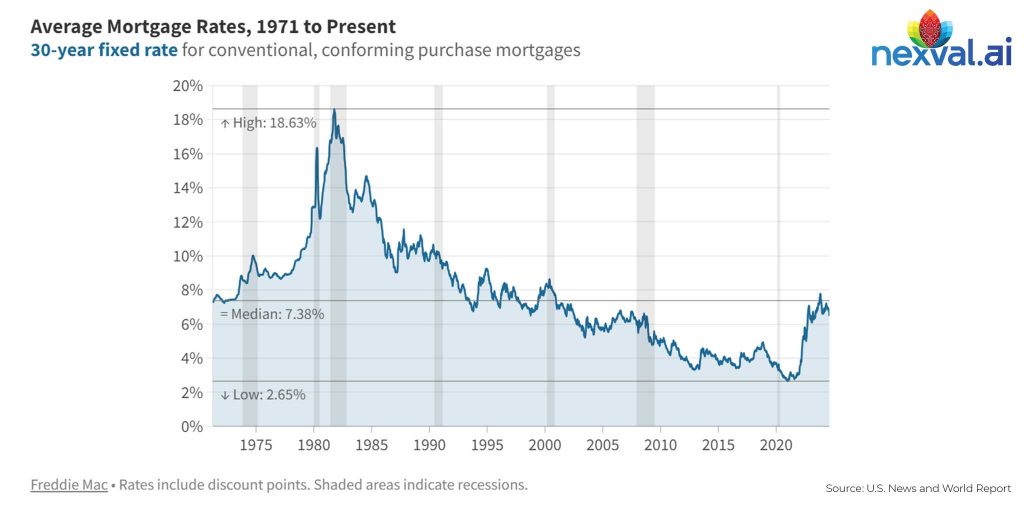
Over the past year, mortgage rates have seen a significant decline, dropping from a peak of 7.79% in October 2023 to around 6.25% in August 2024. This decrease is attributed to factors like cooling inflation (down from 3.2% to 2.9%) and rising unemployment (from 3.8% to 4.3%). This shift benefits potential homebuyers with lower borrowing costs and increased purchasing power.

What does this Fed Meeting mean for Mortgage Lenders?

Interest Rate Cuts: The Fed is expected to reduce rates by 0.25 to 0.50 basis points, impacting mortgage lenders in a few ways:
  • The impact on mortgage rates might be limited as the market anticipates the cut.
  • Lower rates could lead to increased prepayments, reducing servicing fees for lenders.
  • Other economic indicators, like rising unemployment, suggest further rate cuts in the coming months.
What Does This Mean for Homeowners?
Considering Different Scenarios: The Fed’s decision could have varying effects:
  • Rate Hike: This could make refinancing less attractive and potentially increase monthly payments for those with adjustable-rate mortgages (ARMs). The housing market might also slow down due to higher borrowing costs.
  • Rate Hold: Mortgage rates might remain stable, offering a window to refinance before potential future hikes. This stability could also boost consumer confidence in the housing market.
  • Rate Cut: This scenario would likely lead to lower rates, making refinancing highly attractive with potentially lower monthly payments and reduced interest costs. It could also stimulate the housing market by making homeownership more affordable.
Long-Term Goals
Beyond immediate rate changes, homeowners should consider long-term financial goals when deciding to refinance. Factors like the length of time they plan to stay in their home, overall financial health, and future market conditions should be considered.

Unlocking Mortgage Insights with Nexval.ai: Your AI-Powered Guide to Smarter Refinancing

The Federal Reserve’s meeting and the resulting actions can significantly impact mortgage rates. While the immediate effects might be short-lived, homeowners should carefully evaluate their circumstances before making a decision. Consider consulting a financial professional to determine if refinancing aligns with your long-term financial goals.Nexval.ai harnesses cutting-edge AI to analyze vast amounts of market data and forecast potential shifts in mortgage rates. By evaluating key factors like inflation trends, employment rates, and historical Federal Reserve actions, Nexval.ai offers homeowners data-driven insights to make informed refinancing choices.

Visit Nexval.ai today to explore how our AI-driven insights can help you achieve your financial goals.

About the Author:
Leveraging 20+ years of experience and a MBA (Banking), PPD leads Nexval.ai’s Mortgage Services with a passion for AI-powered innovation and RPA efficiency.

Cybersecurity Essentials for Mortgage Tech: Safeguarding the Future

Mortgage technology companies are prime candidates for cyber-attacks. Their complex software supply chains risk leaving room for vulnerabilities. Their systems routinely process high-value transactions and confidential information that could be held for ransom. As a result, the average cost of a data breach in financial services is higher than nearly every other industry, at $5.72 million. That is why mortgage tech companies must formulate a robust cybersecurity policy that factors in the following measures:

1. Adopt stronger password protection

Passwords are the first line of defense against unauthorized access to sensitive information stored in mortgage technology systems. Time-bound passwords are temporary codes that expire after a certain period. This adds an extra layer of security as it reduces the risk of someone using an old or stolen password to gain access to your systems.

Cryptographically generated passwords use complex algorithms to create strong and unique combinations of characters. These random strings are virtually impossible for hackers to guess or crack through brute-force attacks.

2. Add on new authentication layers

Biometrics, such as fingerprint or facial recognition technology, provide an extra level of security by verifying a user’s unique physical characteristics. Multi-device authentication goes one step further by requiring users to authenticate their identity not just on their primary device but also on a secondary device.

However, it’s not enough to simply incorporate these new layers; regularly reviewing login logs enables companies to identify potential vulnerabilities in mortgage technology systems and take proactive measures to address them promptly.

3. Enforce role-based access to mortgage data based on least-privilege practices

In the world of mortgage technology, safeguarding sensitive data is paramount. One effective way to do this is by enforcing role-based access to mortgage data based on least-privilege practices. This means that each user is granted access only to the specific data and functionalities necessary for their job responsibilities.

For example, a loan officer would have access to customer loan details but not administrative settings or other employees’ files. This cybersecurity policy ensures that employees only have the permissions they need, reducing potential vulnerabilities and limiting the impact of any security breaches.

Read more: Best Security Practices for Title and Escrow Companies

4. Move away from fractured architecture

Disjointed systems with multiple points of entry create vulnerabilities that can be exploited by cybercriminals. This fragmented infrastructure not only increases the risk of data breaches but also hampers operational efficiency.

To address these issues, companies should consider consolidating their mortgage systems into a centralized platform. By doing so, they can minimize the number of access points and reduce the potential attack surface. A unified and adaptive architecture allows for better control over cybersecurity policies, making it easier to implement robust defenses against cyber threats.

5. Encourage VPN use for remote employees

In an increasingly digital world, remote work has become the new norm for many industries, including mortgage tech companies. While this brings convenience and flexibility, it also introduces potential security risks when accessing sensitive mortgage data over public networks. To safeguard against these threats, it is crucial to encourage the use of Virtual Private Networks (VPNs) among remote employees.

A VPN creates a secure connection between an employee’s device and the company’s network. By encrypting the data that is transmitted between them, VPNs ensure that any information shared over public networks remains private and protected from prying eyes.

6. Partner with pen testers and ethical hackers

One of the crucial steps in safeguarding your mortgage tech company’s future is to partner with pen testers and ethical hackers. These professionals are skilled at identifying vulnerabilities in your systems and testing their resilience against cyber threats, giving you a detailed cyber risk assessment of your mortgage technology infrastructure.

Ethical hackers apply their expertise to simulate real-world attacks on your mortgage systems, helping you understand where your security measures may fall short. They employ various techniques to discover any weak points or loopholes that could lead to a breach.

Read more: Unveiling the Mortgage Sector’s Response to Cyber Threats

7. Invest in cyber insurance

Cyber insurance provides financial coverage and support in the event of a security breach or data loss. It includes coverage for legal fees, notification costs, public relations assistance, and even compensation for affected borrowers. This can help alleviate the financial burden and reputation damage associated with a cybersecurity incident. Moreover, having cyber insurance demonstrates a commitment to protecting borrower information and instills confidence among both current and prospective clients.

8. Educate both employees and mortgagors

For employees, regular training sessions should focus on recognizing phishing attempts, emphasizing the importance of never sharing personal or financial details via email or phone unless verified. It’s essential to create a culture of skepticism towards unsolicited requests for information and encourage reporting any suspicious activity promptly.

Mortgagors must also be educated on how to protect themselves from phishing attacks. Lenders should provide clear instructions on their website and during the loan application process on how they will communicate with borrowers. Remind them not to click on suspicious links or download attachments from unfamiliar sources and advise against sharing personal information over unsecured channels.

9. (Re)Assess mortgage outsourcing vendors and the software supply chain

Start by thoroughly vetting your outsourcing vendors. Look for providers who prioritize cybersecurity and have robust protocols in place. Conduct thorough background checks and verify their compliance with industry standards such as ISO 27001 or SOC 2.

Additionally, assess the security posture of any third-party software you use within your mortgage systems. This includes conducting regular audits to identify any vulnerabilities that could be exploited by hackers.

10. Switch to the cloud

By moving your systems and data storage to a secure cloud environment, you can ensure that your systems are always up-to-date with the latest security measures. Cloud providers invest heavily in cybersecurity and continuously update their infrastructure to protect against emerging threats. This means that by leveraging cloud technology, you can take advantage of robust security features such as encryption, regular backups, and automated software updates.

Read more: 5 Mortgage Cybersecurity Trends of 2023

Despite a series of security attacks in 2022 and 2023, most mortgage companies are underprepared for what’s ahead. Just about 50% of lenders are testing their own infrastructure’s cybersecurity, which is a worrying sign. Mortgage technology companies must step up and reapproach their offerings as well as SLAs from a security-first perspective to minimize threats in 2024.

At Nexval, we help mortgage industry leaders build and maintain resilient, efficient systems. Speak with our experts to learn how.

Top AI Use Cases Revolutionizing the Mortgage Industry

In 2024, AI in mortgages is beginning to gain momentum. 65% of lenders are familiar with AI, 22% are trialling its use, and 7% have deployed it, finds Fannie Mae. From cybersecurity protection to more tailored borrower experiences, AI opens up all-new process improvement use cases. However, given current skill and infrastructure capacities, firms may rely on mortgage outsourcing for AI to take off. Here are the ten use cases where this can make a genuine difference:

1. Loan application queue prioritization

Imagine a scenario where your loan application is seamlessly processed, prioritized based on risk factors, and swiftly advanced through the pipeline. AI orchestrates this efficiency by analyzing vast datasets to assess the creditworthiness of applicants.

Factors such as credit history, income stability, and debt-to-income ratio are critical to this process — it helps the AI engine accurately prioritize loan applications, ensuring that high-potential candidates receive prompt attention while mitigating the risk of default.

2. Real-time compliance checks

In the ever-evolving regulatory landscape of the mortgage industry, compliance and cybersecurity protection are both paramount. AI acts as a vigilant sentinel, continuously monitoring transactions and documents to ensure adherence to regulatory standards.

Through real-time analysis of vast regulatory databases and dynamic rule sets, AI flags potential compliance breaches. This empowers your mortgage business to pre-emptively rectify issues and maintain regulatory compliance.

3. AI for mortgage cybersecurity protection

With the digitalization of mortgage processes comes the looming threat of cyberattacks. AI fortifies your defenses by deploying advanced algorithms to detect and mitigate cyber threats in real time.

It analyzes traffic patterns, detecting anomalous behavior, and preemptively blocking suspicious activities; this safeguards your sensitive data from the ever-evolving arsenal of cyber threats. AI-based cybersecurity protection measures can ensure the integrity and confidentiality of your mortgage transactions in a much more failsafe manner.

4. Equal opportunity lending in consumer and CRE segments

In the pursuit of financial inclusion, AI emerges as a catalyst for equal-opportunity lending. The close inspection of vast demographic and socioeconomic data makes it possible to uncover patterns of bias and discrimination in lending practices. Leveraging machine learning algorithms, AI enables lenders to design fair and inclusive lending policies that transcend race, ethnicity, and socioeconomic status. It fosters a more equitable landscape in both consumer and commercial real estate lending.

5. Detecting loan fraud and file tampering

The specter of loan fraud and file tampering looms large in the mortgage industry, posing a significant threat to lenders and borrowers alike. AI acts as a vigilant guardian in terms of cybersecurity protection, scrutinizing every aspect of the loan application process to detect signs of fraud and tampering.

Through the in-depth evaluation of behavioral trends, discrepancies in documentation, and possible suspicious activities, AI enables lenders to safeguard against fraudulent practices, preserving the integrity of the mortgage ecosystem.

6. Escrow management automation

Escrow management is a labor-intensive process fraught with manual errors and inefficiencies. While most companies resort to mortgage outsourcing for this, artificial intelligence offers a smarter alternative.

AI revolutionizes this process by automating routine tasks such as fund disbursement, document verification, and reconciliation. Modern AI solutions are built on machine learning algorithms. This helps optimize escrow management, reducing processing time, minimizing errors, and enhancing transparency. You benefit from far more efficient escrow operations.

7. Natural language processing (NLP) for customer service

In the age of conversational banking, natural language processing (NLP) emerges as a game-changer in customer service. AI-powered chatbots equipped with NLP capabilities engage customers in meaningful conversations, addressing their queries, and guiding them through the mortgage application process with unparalleled efficiency.

Since it understands the nuances of human language, NLP-powered chatbots deliver personalized assistance round-the-clock, enhancing the overall customer experience.

8. AI for mortgage KYC

Know Your Customer (KYC) compliance is a cornerstone of responsible lending practices and cybersecurity protection. AI revolutionizes KYC processes by automating identity verification, risk assessment, and due diligence.

AI can analyze vast datasets and leverage biometric authentication technologies. This allows lenders to seamlessly verify the identity of applicants, assess their risk profile, and ensure compliance with regulatory requirements, thereby strengthening the integrity of the mortgage lending process.

9. Personalized mortgage recommendations

Gone are the days of one-size-fits-all mortgage products. AI empowers lenders to deliver personalized mortgage recommendations tailored to the unique needs and preferences of individual borrowers.,

It generates personalized mortgage offers that align with the financial goals and risk tolerance of borrowers, enhancing customer satisfaction and loyalty. To achieve this, AI analyzes demographic data, financial profiles, and market trends at a pace impossible for human beings.

10. Document management and data extraction through OCR

The deluge of documents inundating the mortgage process poses a significant challenge for lenders. AI comes to the rescue with optical character recognition (OCR) technology, which automates document management and data extraction tasks.

It can scan and digitize documents at scale, extracting relevant information, and populating data fields. As a result, OCR-powered AI systems streamline document processing – reducing manual effort, and accelerating the mortgage approval process.

Why Mortgage Outsourcing for AI Adoption Makes Sense

Outsourcing your mortgage tasks for AI adoption can be a game-changer for your lending operations. It lets you bring a specialized team of experts to handle the technological aspects – allowing you to concentrate on your core business activities.

One of the significant advantages of mortgage outsourcing is the access to a pool of specialized talent. These experts are well-versed in the nuances of the mortgage industry and possess the technical skills required to deploy AI solutions effectively.

Moreover, mortgage outsourcing offers unparalleled flexibility and scalability. You have the freedom to adjust your resources based on fluctuating demand and changing business priorities.

Outsourcing can help you mitigate risks associated with AI implementation. With experienced professionals overseeing the process, you can minimize the likelihood of errors. At Nexval, we are mortgage outsourcing experts with decades of experience partnering with America’s top lenders on their digital transformation initiatives.

Speak with our experts to know how we can turbo-charge your AI adoption journey.

Ensuring Mortgage Compliance with Data Analytics: A Comprehensive Guide

Ever since the 2008 financial crisis, we have seen the tightening of regulatory compliance rules in mortgages. COVID-19 introduced further complexities with timebound relief measures and stringent consumer protection laws. In 2024, regulatory bodies are mulling further plans to overhaul capital rules, necessitating changes in their compliance processes. How can mortgage companies keep up? Data analytics could provide an answer.

Read more: Fintech and Compliance…..a Match Made in Heaven?

The Importance of Data Analytics in Your Compliance Function

There are six reasons why data analytics could prove instrumental to the present and future of mortgage regulatory compliance:

1. Automatically ingest and process compliance guardrails as defined by regulatory bodies

Imagine the time and effort saved when you can automatically ingest and process the intricate guardrails set by regulatory bodies.

Data analytics streamlines this process by integrating sophisticated algorithms that swiftly interpret and implement regulatory guidelines into your systems. This automation ensures that your operations are aligned with the latest compliance standards, reducing the risk of oversight or error.

2. Continuously monitor your mortgage process metrics for compliance

With data analytics, you can establish a continuous monitoring system that scrutinizes every aspect of your mortgage processes in real-time.

By tracking key metrics such as loan origination timelines, approval rates, and documentation accuracy, you gain immediate insights into compliance status. This proactive approach allows you to detect deviations from regulatory requirements promptly, enabling timely interventions to mitigate regulatory compliance risks.

3. Automatically generate data reports on compliance adherence and/or deviation

Gone are the days of manual report generation and tedious data compilation. Data analytics empowers you to automate the creation of comprehensive reports that detail your compliance adherence or deviations.

These reports provide in-depth insights into your compliance posture, highlighting areas of strength and areas needing improvement. Armed with this data-driven intelligence, you can make informed decisions to enhance your compliance processes.

4. Demonstrate compliance with changing mortgage laws with concrete data-backed evidence

As mortgage laws evolve, substantiating compliance becomes increasingly challenging. However, with data analytics, you possess a powerful tool to demonstrate adherence to regulatory changes.

By leveraging historical and real-time data, you can track and analyze your compliance efforts over time. This data-backed evidence not only validates your compliance but also enables you to proactively adjust your processes to align with shifting regulatory landscapes.

5. Connect multiple data sources and data workflows to enable integrated compliance

Your regulatory compliance efforts are often hindered by fragmented data sources and disjointed workflows. Data analytics addresses this challenge by seamlessly connecting disparate data sources and workflows into a cohesive ecosystem.

Through advanced integration techniques, you can centralize data from various sources, including customer information, financial records, and regulatory updates. This integration fosters collaboration across departments and ensures consistency in compliance practices throughout your organization.

6. Detect and quantify your most persistent compliance bottlenecks using data

Identifying and addressing compliance bottlenecks is essential for optimizing your processes and minimizing risks. Data analytics equips you with the ability to detect and quantify these bottlenecks with precision.

By analyzing large datasets and identifying patterns, you can pinpoint recurring compliance issues and their underlying causes. Armed with this actionable intelligence, you can implement targeted interventions to enhance efficiency and mitigate compliance risks effectively.

Read more: How AI-Driven Analytics Can Transform Your Mortgage Processes

How to Bolster Your Data Analytics Capabilities for Regulatory Compliance

The importance of data analytics in today’s mortgage landscape simply cannot be overstated. Mortgage businesses can start preparing by implementing the following measures:

1. Conduct a data audit on your mortgage function

Begin by conducting a comprehensive data audit on your mortgage function. Evaluate the quality, accuracy, and completeness of your data across all stages of the mortgage lifecycle. Identify any gaps or inconsistencies in your data collection and storage processes.

This audit will provide you with valuable insights into the current state of your data infrastructure and help you identify areas for improvement to ensure regulatory compliance.

2. Analyze regulatory requirements across jurisdictions and identify data correlations

Regulatory requirements vary across different jurisdictions, making it essential to analyze and understand these requirements thoroughly. Utilize analytics to identify correlations between regulatory mandates and specific data points within your mortgage operations. By mapping out these correlations, you can tailor your data analytics strategies to ensure compliance with relevant regulations in each jurisdiction you operate in.

3. Invest in a compliance team or outsourcing firm with data competencies

To bolster your data analytics capabilities for regulatory compliance, consider investing in a dedicated compliance team or outsourcing firm with expertise in data analytics. These professionals can assist you in developing and implementing data-driven compliance strategies, leveraging advanced techniques that may be outside your existing skills portfolio.

Collaborating with experts in data analytics will enable you to stay ahead of evolving compliance challenges and maintain regulatory compliance effectively.

4. Instill the importance of data analytics in your operational culture

Foster a culture within your organization that prioritizes the importance of data analytics for regulatory compliance. Educate your employees – i.e., provide training on data analytics tools and techniques. By embedding data analytics into your operational culture, you can cultivate a proactive approach to compliance management and empower your team to leverage data effectively in their day-to-day activities.

5. Strengthen cloud-based infrastructure for more agile data operations

Cloud computing offers numerous benefits for data analytics, including flexibility, scalability, and accessibility. By migrating your processes to the cloud, you can streamline data storage, processing, and analysis, enabling faster decision-making and more efficient compliance management.

Additionally, cloud-based solutions often come with built-in security features and compliance certifications, helping you ensure data privacy and regulatory compliance.

Read more: Navigating Compliance Challenges: How a Mortgage Quality Control Partner Can Help

Research shows that 85% of mortgage businesses are concerned about being in compliance; just 15% are confident about regulatory compliance in 2023-24. By harnessing the power of data and recognizing the importance of data analytics, you can stay ahead of the curve and update your tools and processes to address ever-changing regulatory concerns.

Speak to Nexval’s experts to learn how.